The opener doesn’t waste time. “Invocation to the Muse” is two minutes of spoken word over cinematic strings, Andy Biersack’s voice low and deliberate: “You won’t forgive. You shouldn’t forgive.” It’s a manifesto dressed as a prayer, and it sets the album’s emotional temperature immediately. Not darkness as aesthetic, but darkness as doctrine. Revenge isn’t a theme here. It’s a theology.
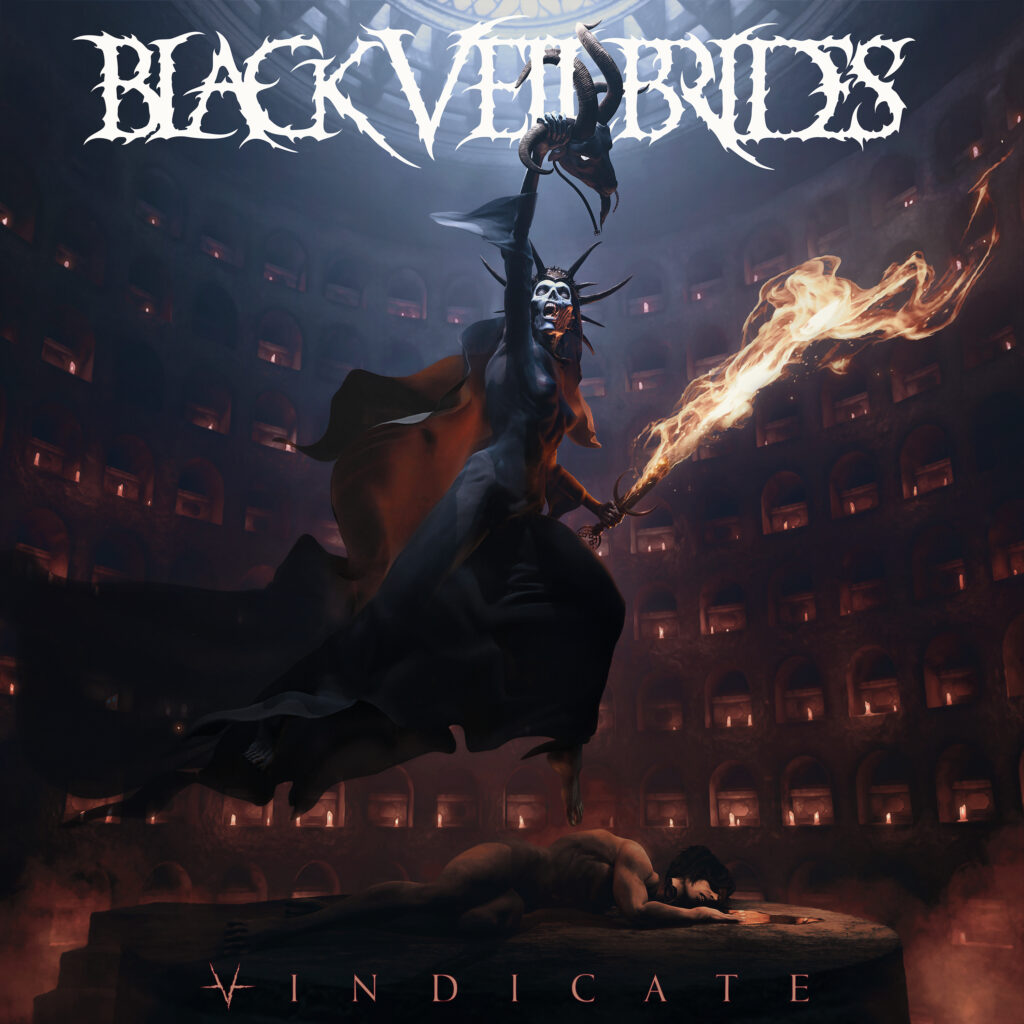
The album art telegraphs all of this before a single note plays. A skeletal, torch-bearing figure ascends over a prostrate body on a stone altar, a candlelit colosseum of witnesses rising behind it. It’s blasphemy as theatre, vengeance as ceremony. The Catholic imagery isn’t accidental. Biersack has been reckoning with faith and iconography since Cincinnati. On Vindicate, he’s stopped reckoning and started pronouncing.
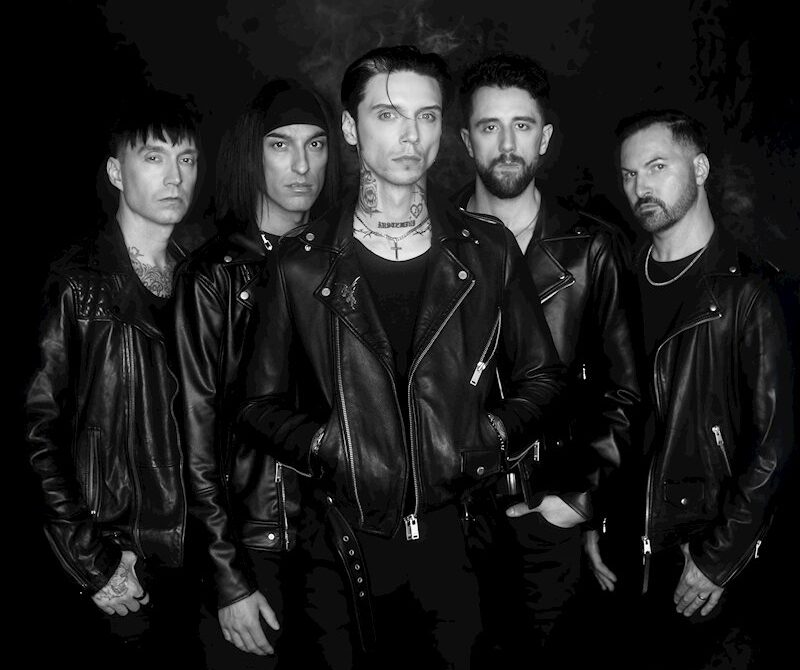
What follows is the most cohesive Black Veil Brides record in years. Produced by Biersack and Jake Pitts in-house, Vindicate has the confidence of a band no longer auditioning for anyone’s approval. The production is dense but controlled, mixed by Zakk Cervini, who knows how to make heavy music breathe. There’s weight here without mud. Guitars sit forward in the mix without burying Biersack’s vocals, which sound noticeably stronger than they did on The Phantom Tomorrow.
The title track is the album’s spine. “I’ll fucking Vindicate my life / and bury what’s left of you” isn’t poetry, but it doesn’t need to be. The riff underneath it is the right kind of blunt, a power chord stomp that locks in and doesn’t let go. Pitts and Jinxx play to their strengths: melodic leads that sit above the rhythm section rather than competing with it. The pre-chorus builds properly. The payoff lands.
“Certainty” is where the album earns some of its more interesting marks. The vocal pattern in the verse, “My mind clicks like heartbeats,” has a rhythmic specificity that most hard rock choruses don’t bother with. There’s a genuine unease in the arrangement. Fan comments noted it as the single most likely to pull back older listeners who felt the band had softened. They weren’t wrong.
“Bleeders” you likely already know. The Top 10 Active Rock hit justifies its placement mid-record as a kind of pressure valve, catchier than the tracks surrounding it, the chorus sticky in the way only a BVB anthem can be. The breakdown is brief and doesn’t overstay.
“Hallelujah” takes aim at digital culture and performative purity. Within the verses Biersack switches between clean singing and unclean screams, dropping into aggression specifically on lines like “Demanding purity while rotting inside” before pulling back. The chorus stays clean throughout. The indictment is vicious, the delivery liturgical. That tension is deliberate. Given the album’s preoccupation with belief and ritual, it couldn’t be anything else.
“Revenger” features Robb Flynn of Machine Head, and the pairing is both logical and a little thrilling. Flynn’s voice against Biersack’s creates a genuine tonal contrast, the older veteran and the melodic rock guy, both leaning into groove-metal territory that BVB hasn’t explored this directly before. The song’s bridge, “Every tear that you cry you can justify the lies,” is the kind of lyric that looks clunky on a page and sounds perfectly placed at volume.
“Woe & Pain” at eight minutes is the album’s indulgence, the track that tests your patience or rewards it depending on your appetite for BVB’s more sprawling instincts. The outro takes its time. The payoff, a chorus that finally breaks the tension, hits harder for the wait.
“Grace” (71 seconds) and “Purgatory” (two minutes) function as interludes, the album’s structure mirroring a concept record’s logic without announcing itself as one. The throughline is belief, in yourself, in vengeance, in the refusal to absorb humiliation quietly. Biersack has been mining this territory for fifteen years, but Vindicate feels like the sharpest version of that argument he’s made.
Not everything lands. A couple of the back-half tracks blur together in ways the singles don’t, and “Ave Maria” needs a second listen before its purpose clarifies. But the sequencing is deliberate, and the album rewards patience.
The BVB Army will feel vindicated. The skeptics will find less to mock than usual. And anyone who dismissed this band as a teen phenomenon should probably reckon with the fact that they’ve now made seven records, the seventh being their most focused and arguably their heaviest.
That’s not nothing.
8/10




I’m Drew, the founder and editor of Front of the Stage. I have a strong love for music and photography, which started at a very young age. There’s just something I love about experiencing live music and capturing memories that will last a lifetime, and that’s how Front of the Stage came to be.