
Twenty-one years in, and Tigers Jaw still don’t announce themselves. They just show up — warm, a little worn at the edges, and somehow exactly what you needed.
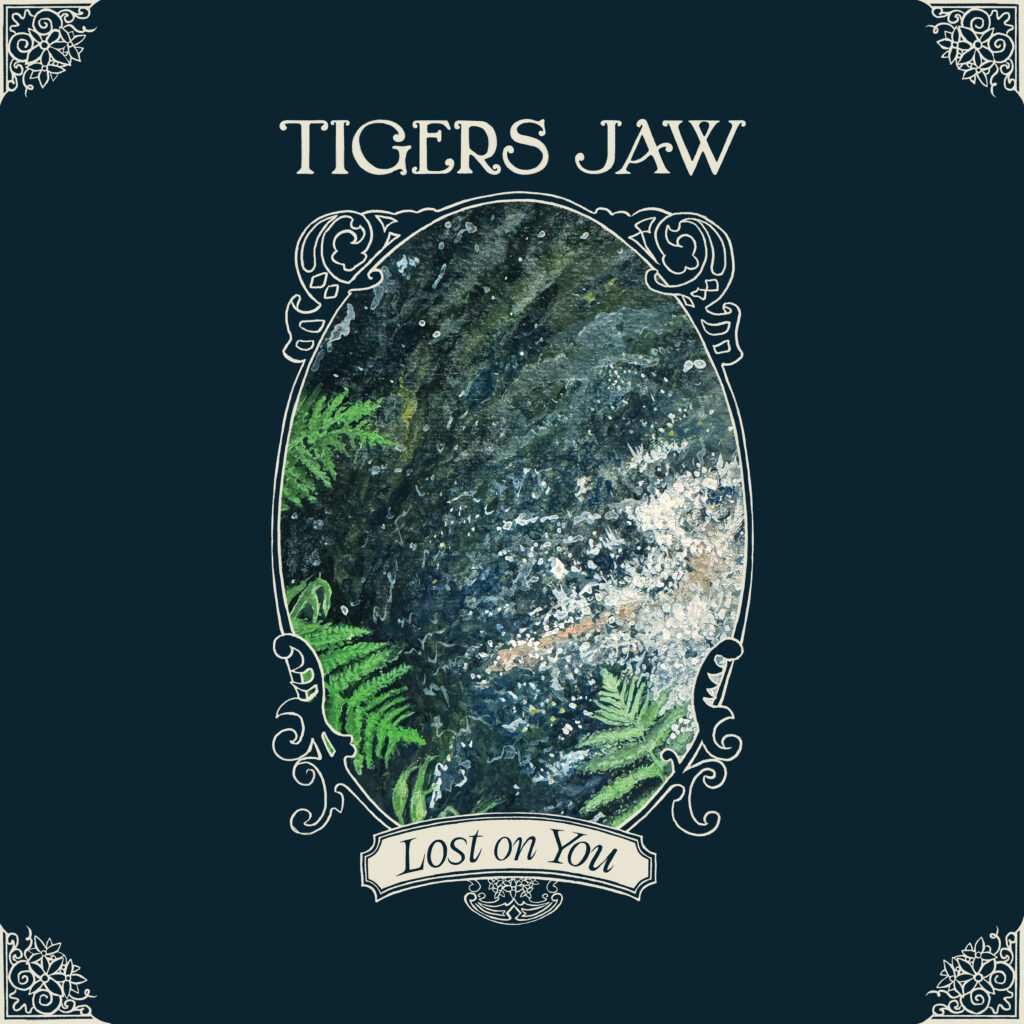
Lost on You, the band’s seventh album, arrives five years after I Won’t Care How You Remember Me and carries that same unhurried confidence that has always set them apart from the louder corners of the scene they helped build. Ben Walsh and Brianna Collins, now joined by a full and settled lineup in Mark Lebiecki, Colin Gorman, and Teddy Roberts, have made something that feels less like a new chapter and more like a long exhale — the sound of people who’ve stopped trying to figure out where they’re headed and made peace with simply being where they are.
That theme runs through everything here. The album’s central idea, that we don’t live our lives in clean chronological order but carry our past, present, and future selves all at once, sounds like it could tip into something overly precious. Instead it just feels true. Walsh said the band wanted to let things progress naturally, to feel confident in the material before putting it out. You can hear that patience in every track. Nothing is forced.
Producer Will Yip, who has been in their corner since I Won’t Care How You Remember Me, captures the band at a sweet spot — full and warm without being overworked. The rhythm section hits hard where it needs to, the guitar lines move around each other with easy familiarity, and the back-and-forth between Walsh and Collins continues to be one of the more quietly underrated vocal dynamics in this corner of indie rock.
The album opens with “It’s Ok,” a 102-second sketch that doesn’t so much ease you in as remind you where you are. By the time “Primary Colors” arrives, they’re in full swing — a driving midtempo that shares some DNA with Jimmy Eat World at their most direct, built around Collins navigating the strange aftermath of something unresolved. The lyric she lands on in the bridge — “I understand it all now / It’s not supposed to make sense” — is one of those lines that sounds simple until it doesn’t. The album keeps returning to that feeling.
“Head Is Like a Sinking Stone,” released as the lead single back in December, holds up well in the context of the full record. The pre-chorus — the time got away, got away from me — has the kind of repetition that burrows in and doesn’t leave. It’s a song about being outpaced by your own life, and it hits with the plainness that Tigers Jaw have always been best at.
“BREEZER” is the album’s most restless moment — a song about self-doubt that doesn’t resolve neatly because self-doubt rarely does. I cut my hair short, now I’m growing it long. It circles, second-guesses, and eventually lands somewhere that isn’t quite certainty but isn’t despair either. Long-time fans will recognize this mode immediately. It’s classic Tigers Jaw in the best possible way.
“Ghost” is the one that might hit hardest. At two and a half minutes, it’s barely a song by conventional measure, but it doesn’t need more time. The image of seeing a ghost from your parents’ porch and simply letting it be there — not chasing it, not explaining it — captures something the album keeps reaching for: the idea that some things don’t need to be resolved to be understood. The chorus, which doesn’t build so much as accumulate, sits with you long after the track ends.
“Baptized on a Redwood Drive” is the album’s longest and most expansive moment, stretching toward something more open and unhurried, while “Anxious Blade” and “Staring at Empty Faces (immigrant)” dig into the kind of everyday unease that Tigers Jaw have always given weight to without dramatizing. The title track closes things quietly, bringing the album back to the same uncertain but oddly steady place it started from.
Longtime fans will recognize the touchstones — two worlds, ghosts, the pull of the past — but Lost on You doesn’t feel like a band raiding their own catalogue. It feels like a band who has simply lived long enough that these things keep coming back around, the way they do for everyone. The scene that Tigers Jaw helped shape has grown enormously, and they’re now playing rooms ten times the size of the Scranton venues where this all started. None of that seems to have changed what they’re actually after.
They were the band that wrote those songs then. They’re still that band now. If you’ve been paying attention, that’s exactly the point.




I’m Drew, the founder and editor of Front of the Stage. I have a strong love for music and photography, which started at a very young age. There’s just something I love about experiencing live music and capturing memories that will last a lifetime, and that’s how Front of the Stage came to be.