

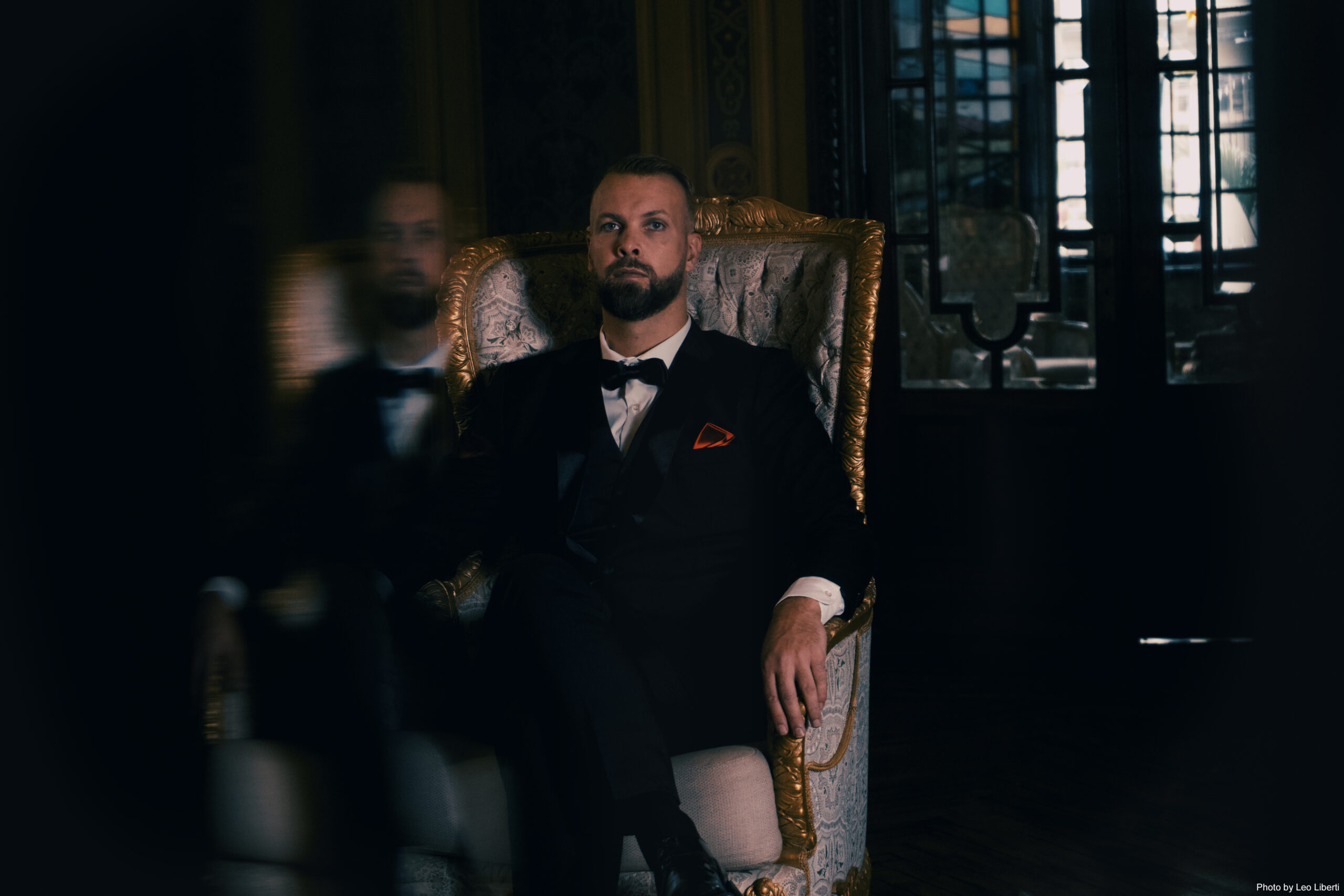
There’s a kind of creative restlessness in Einar Solberg that most artists only perform. He’s genuinely incapable of standing still. In Leprous, the Norwegian band he’s fronted for over fifteen years, he’s helped reshape what progressive metal can sound like, steering it gradually from heavy riffing into something far stranger and more personal. His 2023 solo debut, 16, went further still, stripping guitars almost entirely in favor of electronica and introspection. It was a record more interested in processing grief than making a statement.
Vox Occulta is a statement.
The album was built from the ground up around the Norwegian Radio Orchestra, which is not a small distinction. Solberg has said that the orchestra was never meant to be a layer dropped onto finished songs, but the actual foundation everything else was constructed on. He booked studio time with them before he’d written a note, and spent weeks on tour buses hurriedly scoring orchestral parts ahead of a November 2024 recording deadline. The band came after. The result is music that sounds exactly like that process: enormous, cinematic, and orchestrally fluent in a way rock rarely manages.
The album opens with “Stella Mortua,” which is about envy — specifically, the quiet corrosive kind that creeps in even when you’ve done everything right. Solberg croons over strings before the electric guitars arrive and the song opens into a chorus that feels genuinely earned. The lyrical conceit is sharp: he’s not writing about failure but about the shame of feeling diminished by someone else’s success. “Their ascent became my scar,” he sings. “I’m so paralyzed.” It lands harder for being so recognizable.
“Medulla” hits differently — heavier, more physically imposing, with a riff that earns its space. Where “Stella Mortua” draws you in, “Medulla” presses down. Its lyrics trace a different kind of crisis, the slow fracture of someone trying to hold themselves together, cycling through doubt and determination with the chorus insisting, stubbornly, “My marrow is strong.” It’s not subtle, but it doesn’t need to be. Solberg’s voice in full command of a track this size is a compelling thing to hear.
“Serenitas” arrives almost as relief. Solberg has spoken about how the song began entirely by accident — he showed up to a studio session with a flu so bad he couldn’t sing, and rather than waste the booked time, he sat at a piano and wrote. The song he made that day became, after months of revision, one of the album’s most emotionally precise moments. It builds slowly, almost stubbornly, holding back until Pierre Danel’s guitar arrives past the midpoint and rides the song nearly all the way home, with real feeling behind every note.
The title track, eight minutes long and named for the Latin phrase meaning “hidden voice,” is Solberg examining the parts of himself he’d rather not examine — the impulsive spending, the flashes of disproportionate anger, the thoughts that pass through a person’s mind and don’t reflect who they want to be. He approaches it with curiosity rather than shame. “Why did I get super angry at this person and waste my breath?” he’s said of the song’s intent. The track moves accordingly: chaotic, then briefly calm, then unsettled again. “Grex,” at nearly twelve minutes, gives the album its most epic scope.
Throughout all of it, the production from Solberg and David Castillo holds. Castillo, who’s worked extensively with Opeth and Katatonia, has a skill for keeping large-scale recordings from becoming unwieldy, and the mix from Adam Noble (known for his work with Biffy Clyro) gives the orchestra room without letting it overwhelm. When strings and electric guitar coexist in this music, it doesn’t feel like a compromise — it feels like the songs required both.
Solberg has been clear about what he wants this solo project to become. He’s talked about owning the “cinematic” lane in progressive music, about building a legacy that stands separate from Leprous. Vox Occulta makes that ambition legible. It’s the sound of someone who knows exactly what he’s reaching for, reaching for it without apology.




I’m Drew, the founder and editor of Front of the Stage. I have a strong love for music and photography, which started at a very young age. There’s just something I love about experiencing live music and capturing memories that will last a lifetime, and that’s how Front of the Stage came to be.


